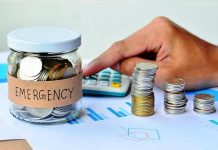


































This is the first question that crops up in our minds when we think of emergency savings. Emergency savings are an essential part of our financial management. You might not initially know its importance, but it can have a huge payoff in times of need. Being prepared for an emergency can be a wise step toward a better, more organized future. A sudden home repair, an urgent car repair, or a sudden trip to meet an ill person—such unplanned instances can occur anytime and can become a burden if you’re not financially prepared for them.
Now that you know the importance of it, you might think about how much to save for an emergency and how to get started with it. Let’s know about the figure to keep aside as emergency savings. We share with you 4 simple steps to establish an emergency savings fund.
4 simple steps to establish an emergency savings fund:
1. How much should I save in my emergency savings account?
Without knowing a target, it would be difficult to save. The money in your emergency savings should be enough to cover your major expenses for 6 to 9 months.
Start with a 3-month target:
If you’ve just started to save, this figure might look challenging. To get started, you can fix a short-term goal as “money to cover your expenses for 3 months” and build from there.
2. Know the expense sectors and set an amount for each sector
Now that you know how much to save as emergency savings, list the areas where you spend regularly. To evaluate the exact amount to save as emergency savings, you need to consider the following expenses:
• Food expenses
Evaluate your monthly food expenses for the areas where you can cut down the costs and add this amount to your emergency savings. Meanwhile, look for alternate ways to reduce your food expenses; for instance, cutting down on regular dine-outs, cooking your meals; pack your lunch, etc.
• Housing expenses
List down all the costs related to housing, such as rent or mortgage, insurance, utilities, and property taxes. It is necessary to have enough money in your emergency savings account to cover the emergency home repair costs.
• Transportation expenses
Track down your daily commuting charges and consolidate them to get the monthly amount. However, if you own a vehicle, then add all the costs related to your vehicle (maintenance costs, fuel costs, emergency repair costs, auto insurance, and car loan) to your emergency savings. Analyze your transportation expenses and see if there’s any scope to cut down on the fuel charge and save it.
• Insurance
Add all the insurance costs, such as dental, medical, disability, life insurance, etc., to know the estimate of your monthly insurance expenses. COBRA (the Consolidated Omnibus Budget Reconciliation Act) enables you to stay on your former employer’s health plan for a limited period under certain circumstances, such as voluntary or involuntary job loss, a transition between jobs, divorce, death, etc.
• Debt repayments
Clear off your credit card debts on time to maintain a good credit score. To avoid any stress in the case of unemployment or a bad financial situation, take immediate steps to get rid of all the debts that you have. Try to create a balance between saving money and clearing off debts by planning and following a proper budget. Once you clear all the existing debts, avoid getting into any new debt.
• Personal expenses
Don’t forget to consider your personal expenses to know how much to save in the emergency savings account. Include every cost, such as toiletries, parlor expenses, and haircuts; adding all the costs might make a huge difference to the overall budget.
3. Create a savings plan
To get started with the savings plan, add any bonuses or tax refunds that you get. Then, gradually start putting a fixed amount into your savings every month.
4. Where should you put your emergency savings
There are 2 options to save your money:
• Regular savings account:
Easy to access
A good option for beginners who have just started to save and have less money in their savings accounts
Zero or very low minimum balance to be maintained
• Money market account:
Higher interest rates with a growing balance
Easy to access
Requires a higher minimum balance to be maintained
Offers better returns than a regular savings account
Summing up:
Expenses can crop up anytime, and if it’s something that needs to be considered urgently, you should be prepared for it financially. By following the 4 simple steps mentioned above, you will be able to establish an emergency savings fund and have a financially secure future.