

































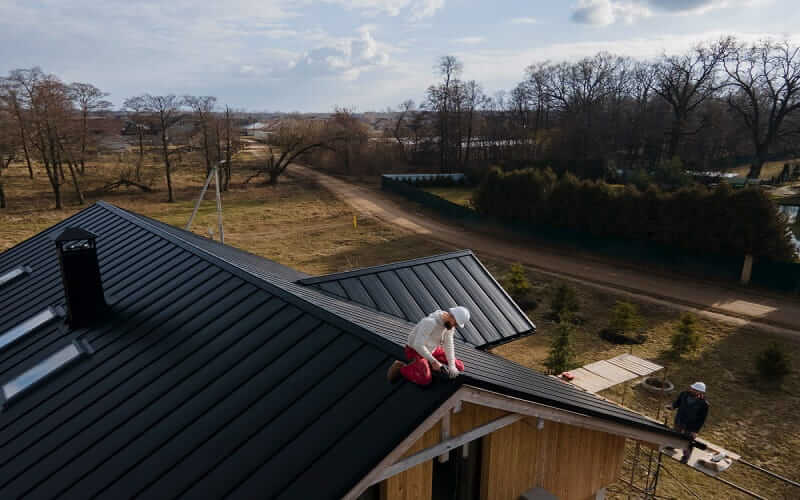
Reliable roofing depends on a group of materials working together rather than one visible surface. Each layer helps manage water, heat, wind, moisture, or structural movement differently. Knowing how those parts connect makes it easier to understand repair recommendations and compare a focused fix with full roof replacement.
The Roof Deck Creates the Foundation for Everything Above
Decking forms the solid base attached to the rafters or roof trusses. Plywood and oriented strand board are common materials, and both must remain flat, dry, and firmly supported for the finished roof to perform correctly. Soft panels, swollen edges, or loose seams can prevent nails from holding securely and may cause shingles to look uneven.
During replacement work, removing old materials gives crews the best opportunity to inspect this hidden surface. Limited damage can often be cut out and repaired, while broader deterioration may require several panels to be replaced before new layers are installed. Experienced Huntsville roofers document weak areas, so homeowners understand why the scope changed.
Underlayment Adds Protection Beneath the Finished Surface
Underlayment sits between the roof deck and the outer roofing material. Its purpose is to provide secondary protection if wind-driven rain passes beneath a lifted shingle, damaged flashing joint, or exposed edge. Modern synthetic products often resist tearing and moisture more effectively than older felt materials.
Certain areas may need stronger membrane protection because they handle heavier water exposure. Valleys, eaves, low-slope sections, and spaces around roof penetrations commonly receive added attention. Homeowners searching for roofing near me should ask where each underlayment product will be used rather than assuming one material suits the entire roof.
Starter Strips Help Secure the Roof at Its Edges
Starter strips create the first sealed course along the eaves and rakes. These pieces provide adhesive support beneath the lower edge of the shingles, where wind can exert strong upward pressure during storms. Improvised starter materials may leave exposed joints or weak bonding near the perimeter.
Correct placement also supports proper water shedding into the gutters. Poor alignment can allow runoff to reach fascia boards or slip beneath the first shingle course. A knowledgeable roof company treats edge preparation as part of the full roofing system instead of a minor finishing step.
How Do Shingles Manage Sunlight, Rain, and Wind?
Asphalt shingles form the visible weather surface, but their performance depends on several internal components. The fibreglass mat provides reinforcement, asphalt creates water resistance, and mineral granules shield the surface from ultraviolet exposure. Adhesive strips help neighbouring courses remain sealed against normal wind pressure.
Product quality, installation, ventilation, and roof slope all affect how long shingles remain useful. Curling, granule loss, cracking, and broken seals may stay limited to one area or spread across multiple roof planes. A roof repair company can determine whether targeted service will restore protection or whether widespread wear supports replacement.
Flashing Protects the Roof’s Hardest-Working Transitions
Flashing directs water away from chimneys, skylights, plumbing vents, sidewalls, valleys, and other interruptions in the roof surface. Metal pieces must overlap correctly with shingles and underlayment so runoff follows a controlled path rather than entering a seam. Sealant may support these joints, but it should not serve as the only barrier.
Temperature movement can loosen fasteners, split old sealant, or pull poorly fitted metal away from adjoining materials. Focused Huntsville roof repair may correct a single failed connection while the surrounding roof remains sound. Extensive flashing problems across several areas can make broader reconstruction more practical.
Ventilation Helps the Roof Handle Heat and Moisture
Balanced ventilation allows outside air to enter near the lower roof edge and warmer air to leave near the ridge. That movement reduces attic heat buildup and helps carry moisture away before it collects on decking, rafters, or metal fasteners. A roof can still age too quickly when the outer materials are new, but airflow remains poor.
Blocked soffits, undersized exhaust vents, and isolated attic spaces can prevent the system from working as intended. Contractors should calculate intake and exhaust needs instead of adding vents without a plan. Homeowners looking for roof repair near me may discover that correcting airflow is part of protecting both current and future roofing materials.
Fasteners Quietly Hold the Roofing System Together
Roofing nails must pass through designated fastening zones and penetrate the deck deeply enough to remain secure. Overdriven nails can cut into the shingle mat, while raised heads may keep tabs from lying flat. Incorrect spacing can also reduce resistance to wind across larger sections.
Small fastening errors become more serious when repeated hundreds of times. Quality control during installation helps keep shingles aligned, sealed, and evenly supported. Skilled crews adjust nail-gun pressure and inspect placement throughout the project rather than waiting until the roof is complete.
Ridge Caps and Vent Details Finish the Highest Seams
Ridge caps cover the line where roof slopes meet. These pieces face direct sun, rain, and wind, so they need proper overlap, fastening, and product compatibility. Cutting standard shingles for this purpose may not provide the same fit or performance as materials made for ridge installation.
Vent openings beneath some ridge systems add another layer of detail. Filters, baffles, and cap placement must keep out wind-driven rain while allowing warm attic air to escape. Reliable Huntsville roofers check that the ridge remains both weather-resistant and properly ventilated.
Drainage Components Carry Water Beyond the Roof Surface
Valleys, drip edges, gutters, and downspouts continue the drainage path after shingles shed the rain. Each component must direct water toward the next without creating backups near the eaves or concentrated flow over lower roof sections. Debris, poor slope, and undersized outlets can interrupt that route.
Upper-level downspouts deserve attention because they may release large volumes of water onto shingles below. Redirecting runoff can reduce granule wear and help prevent overloaded gutters. Effective drainage planning considers the whole property rather than stopping at the roof edge.
Repairs and Replacement Depend on Which Layers Have Failed
Localized damage may involve one shingle section, flashing joint, vent boot, or small piece of decking. Focused repair can preserve the remaining roof when the other layers continue working correctly. Broader failure across the deck, underlayment, shingles, and transitions may make replacement a better use of time and materials.
Fleming Roofing examines how each roofing layer is performing before recommending a solution. By checking the deck, moisture barriers, flashing, ventilation, drainage, fasteners, and surface materials, the team can identify whether targeted Huntsville roof repair will solve the problem or whether a complete roofing system should be rebuilt.